Gray Blending for Dark Hair: A Guide

Gray blending for dark hair is the softer alternative to covering every gray strand. Instead of dyeing your roots one solid shade every few weeks, a colorist works your grays into your brunette, dark brown or black hair with highlights, lowlights and gloss, so the line at the root fades and grow-out looks natural. You will also see it spelled grey blending.
Quick answer: does gray blending work on dark hair?
- Yes, with more planning. Stylist Jacob Habib Khan told Allure that "absolutely any hair color" can look good with gray mixed in, though the blend is more seamless on lighter hair.
- It softens grays instead of hiding them, using highlights, lowlights or tonal glosses (Harper's Bazaar, Vogue).
- Expect more than one visit. Where hair is dyed brown or black, Harper's Bazaar says the process "may be considerably longer."
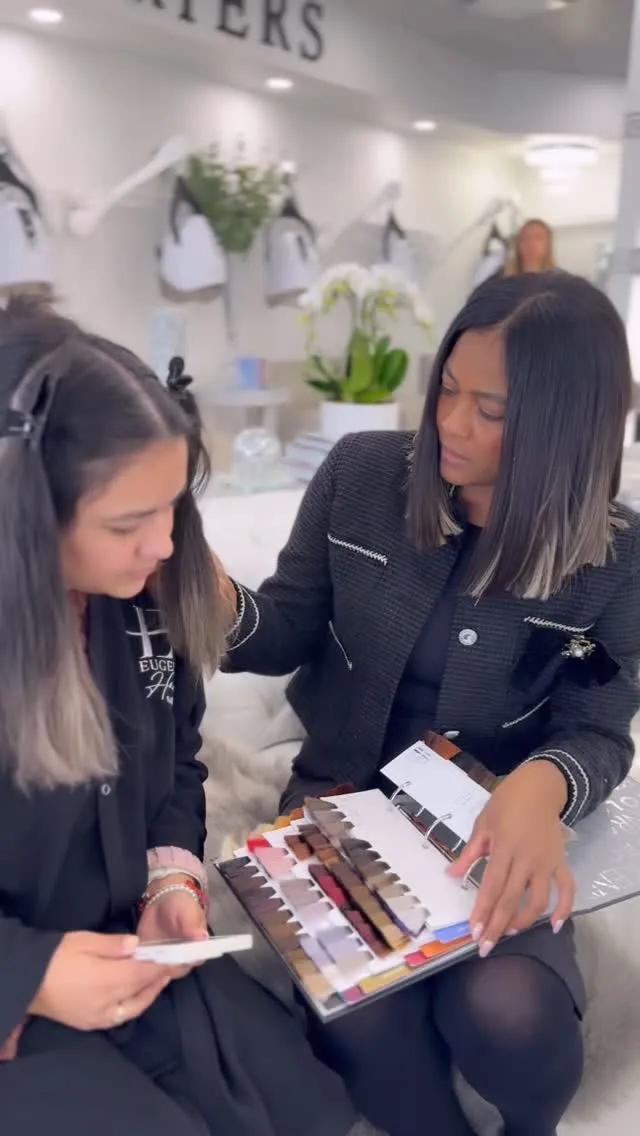
- It starts with a consultation. At the studio, color begins with a free color consultation and a test strand, 24 to 48 hours before the color appointment.
What is gray blending, and why is everyone asking for it this winter?
Gray blending is "a precision hair coloring technique that seamlessly integrates your grays with your natural hair color," London colorist Sarah Bower told Harper's Bazaar. In Vogue, Sonia Presswala of Looks Salon says it "integrates silver strands with highlights, lowlights, or tonal glosses, allowing them to coexist with the dyed sections." Allure notes that the "quiet silver" trend is "also known as gray blending."
The interest is real. Oprah Daily calls quiet silver the hottest hair color trend this season and reports a Mintel figure: 32 percent of women in the U.S. over the age of 45 are choosing not to color their gray hair. For winter 2026, Who What Wear lists "Glossy Gray" among the season's trends. "I think we're seeing a shift in how women feel about going gray," colorist Barb Thompson told the magazine, adding, "in the drier months of winter, who doesn't want shinier, more reflective hair!"
It is not only an over-50 choice: in Vogue, Presswala says most of her gray-embracing clients are in their 40s and 50s, while salon owner Florian Hurel sees women in their 20s and 30s too.
Gray blending vs gray coverage vs balayage
Gray coverage hides the gray. Gray blending is the goal of softening it. Balayage is one technique a colorist can use to get there.
| Gray coverage | Gray blending | Balayage | |
|---|---|---|---|
| Goal | Hide every gray with one solid color | Let grays show, with the contrast softened | Soft, sun-kissed dimension; one possible tool for blending |
| How it is done | One color from root to ends | A custom mix of lowlights, highlights and semi- or demi-permanent color, plus a gloss or toner | Color painted on by hand, no foils |
| Grow-out | Regrowth shows at the root | No harsh line where the color stops and the gray starts | Soft, no hard line |
| Upkeep | Root touch-ups, sooner than other color | Fewer, more spaced-out visits, with a gloss or toner in between | Lowest of the studio's three main color options |
Coverage and balayage details come from our balayage and hair color page; blending details from Oprah Daily and Harper's Bazaar. Oprah Daily says the goal is "to eliminate the harsh demarcation line that happens when you fully cover your grays, allowing for more time between appointments."
Where French blending fits
"French blending" is a color application method created by L'Oréal Professionnel. Colorist Jenna Perry told Vogue to think of gray blending as the umbrella concept and French blending as a more precise, hand-painted placement. Vogue and Allure describe three levels: first blending for your first grays, retouch blending to soften the regrowth line, and total blending, which combines balayage and other techniques.
Gray blending for dark hair: what changes
The contrast between deep brown or black and bright silver is bigger, so dark hair takes more care. Colorist Victoria Suarez told Allure, "I do think it's a bit more of a seamless look on someone with a lighter natural hair color." Swati Gupta of Bodycraft Salon explained why in Vogue: "sometimes the hair would need to be lightened several levels to match the gray tone, which is not always easy or advisable." So the process often uses gradual blending that lets the hair grow out while the contrast shrinks.
Lowlights for dark hair
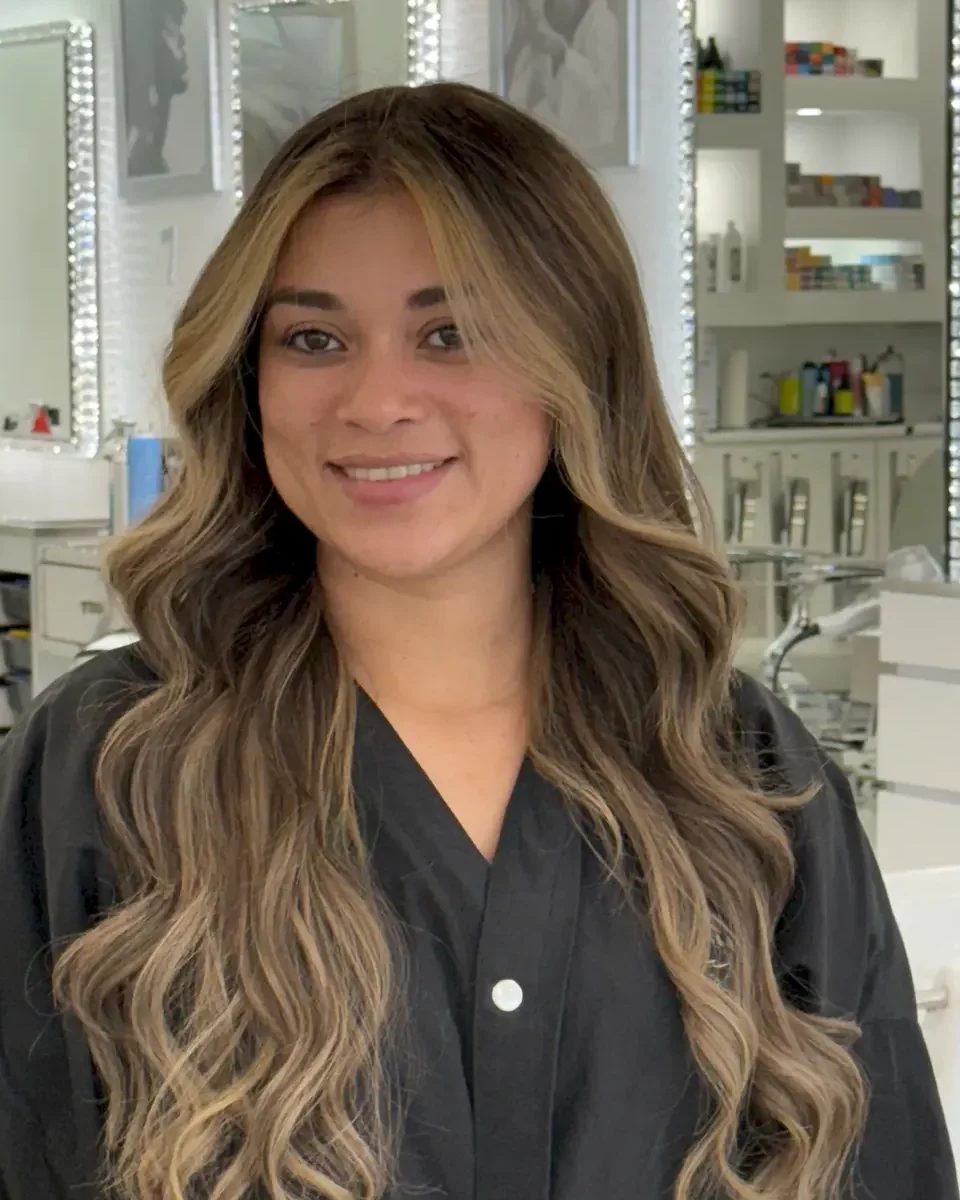
Lowlights are darker ribbons of color woven in to blend. In Good Housekeeping, former GH lab director Birnur Aral describes her colorist adding baby highlights all over, then dark brown color on the remaining hair "to create an all-over salt-and-pepper effect." Colorist Farah Hurdle told Allure she highlights where there is more silver and lowlights where the hair is darker.
Highlights that lift well
Lightening very deep brown or black hair to a pale silver can be difficult, colorist Christel Barron-Hough told Harper's Bazaar. From light brown, "the key here is to make the highlights very thin, as this will lift better." For brunette hair with grays just starting to show, colorist Siobhan Haug suggests "sun-kissed honeycomb shades or a teak toner."
Gray blending for black hair
Black hair has the most contrast, so the plan is gradual: lowlights and soft dimension first, and lightening only where it lifts well.
Gray blending for dark curly and coily hair
Texture helps. Colorist Kadi Lee told Vogue that curly and coily hair is one of the most forgiving hair types for gray blending: "The curls do the blending for you." On curly hair, Haug told Harper's Bazaar, "I would work with a bit more dimension, taking textured weaves." Oprah Daily notes that texture can change as hair goes gray; if new frizz is the issue, a keratin smoothing treatment can help.
Can you do gray blending without bleach?
Sometimes, but no one can promise it before seeing your hair. A blend built mostly from lowlights and demi-permanent color may need little or no lightener. Stylist Chloe Williams told Allure about a demi-permanent color "that wouldn't cover 100 percent of your grays," adding "a bit of a tint." Brightening dark hair toward silver usually means some lightening, which Vogue's Gupta says can be several levels. Your consultation and test strand decide.
How to transition to gray blending: appointments and timeline
Bower told Harper's Bazaar that "multiple sessions are often required," and Oprah Daily notes that breaking up one all-over color "can take more than one appointment." A typical path:
- Let some gray grow in. "I tell people to get at least two inches of gray growth to begin with," NYC colorist Nikki Ferrara told Good Housekeeping.
- Book a color consultation. At the studio it is free and includes a test strand, 24 to 48 hours before the color appointment.
- First blending session. Highlights, lowlights or both. It can be long: Aral spent "a total of seven hours in the salon," one person's experience.
- Follow-up sessions as needed. Dark or heavily colored hair usually needs more than one.
- A gloss or toner in between. "Usually, you will have to get a gloss every once in a while to keep the brassiness at bay," Ferrara says.
Ferrara puts a full transition to gray at "anywhere from six months to a year." Box dye or several layers of old color is a color correction, planned in stages, so your hair stays strong between visits.
A haircut helps too. Aral suggests a shorter cut and regular trims while growing out. Our haircuts and styling page recommends a trim every 6 to 10 weeks for healthy hair, or every 10 to 12 weeks when growing it out.
How long gray blending lasts and how to keep it bright
"Less salon visits and longer time between appointments is often the case," Bower told Harper's Bazaar. With no hard line at the root, you are not racing your regrowth. The studio's guidance is a color refresh every 6 to 10 weeks, often just a gloss; all-over color and gray coverage need the root sooner. Tell your colorist "exactly how often you want to come in," as salon owner Ian McCabe advised in Oprah Daily.
| Step | How often | Source |
|---|---|---|
| Color refresh, often just a gloss | Every 6 to 10 weeks | Studio balayage page and FAQ |
| Gloss or toner to neutralize warmth | Between visits, when the tone starts to fade | Harper's Bazaar; studio balayage page |
| Purple or violet toning shampoo | Once or twice a week on highlighted hair | Studio balayage page (Oprah Daily warns that too much can leave a bluish or purple tint) |
| Sulfate-free, color-safe shampoo | Every wash | Studio balayage page |
| Deep-conditioning mask | Once a week | Studio balayage page; Good Housekeeping |
Winter care for gray and blended hair in Virginia Beach
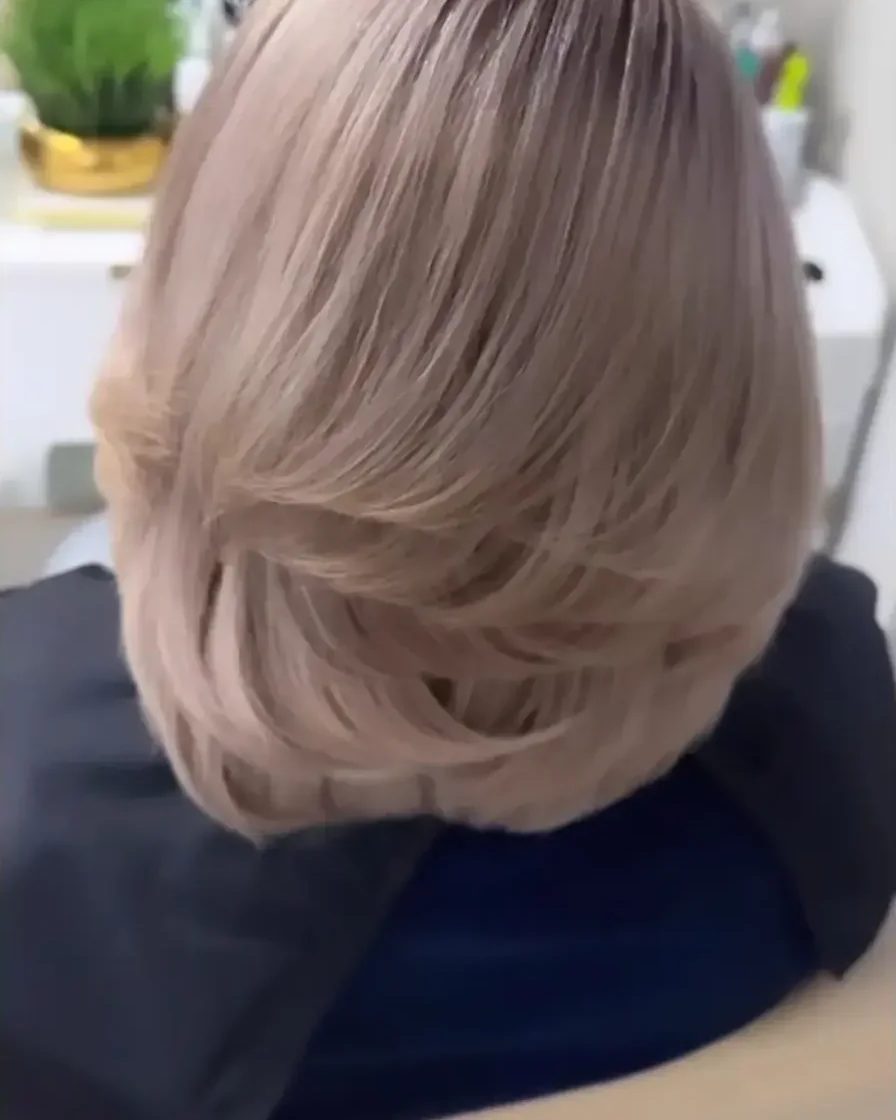
Gray strands need extra moisture, and dry winter air makes that harder. Lee told Vogue that gray hair "tends to be drier, coarser, and more prone to yellowing," and recommends regular salon glosses and moisturizing products. "My gray is a bit wirier, so I now use more conditioner than I'm used to," GH Beauty Lab senior chemist Sabina Wizemann told Good Housekeeping, which also suggests a hydrating, deep-conditioning mask for coarse grays.
- Deep condition once a week. At the studio, deep conditioning is also available as an add-on to any cut.
- Book a gloss when the tone fades, instead of waiting for a full appointment. Shine is the point of "Glossy Gray."
- Use a heat protectant before styling.
For more on keeping color glossy in dry winter air, see our winter hair color ideas. For December parties, see our holiday hairstyles.
What to ask at your gray blending consultation
Bring photos and ask:
- How much gray do I have, and where? Haug says grays usually appear at the temples and through the part.
- What is my color history? Mention any box dye; dark box dye is the hardest to lift.
- How often do I want to come in? Be realistic about upkeep.
- Will my hair need lightening, and how many sessions?
- What is the toner and gloss plan to keep the blend from turning brassy?
- Should I change my haircut while I grow out?
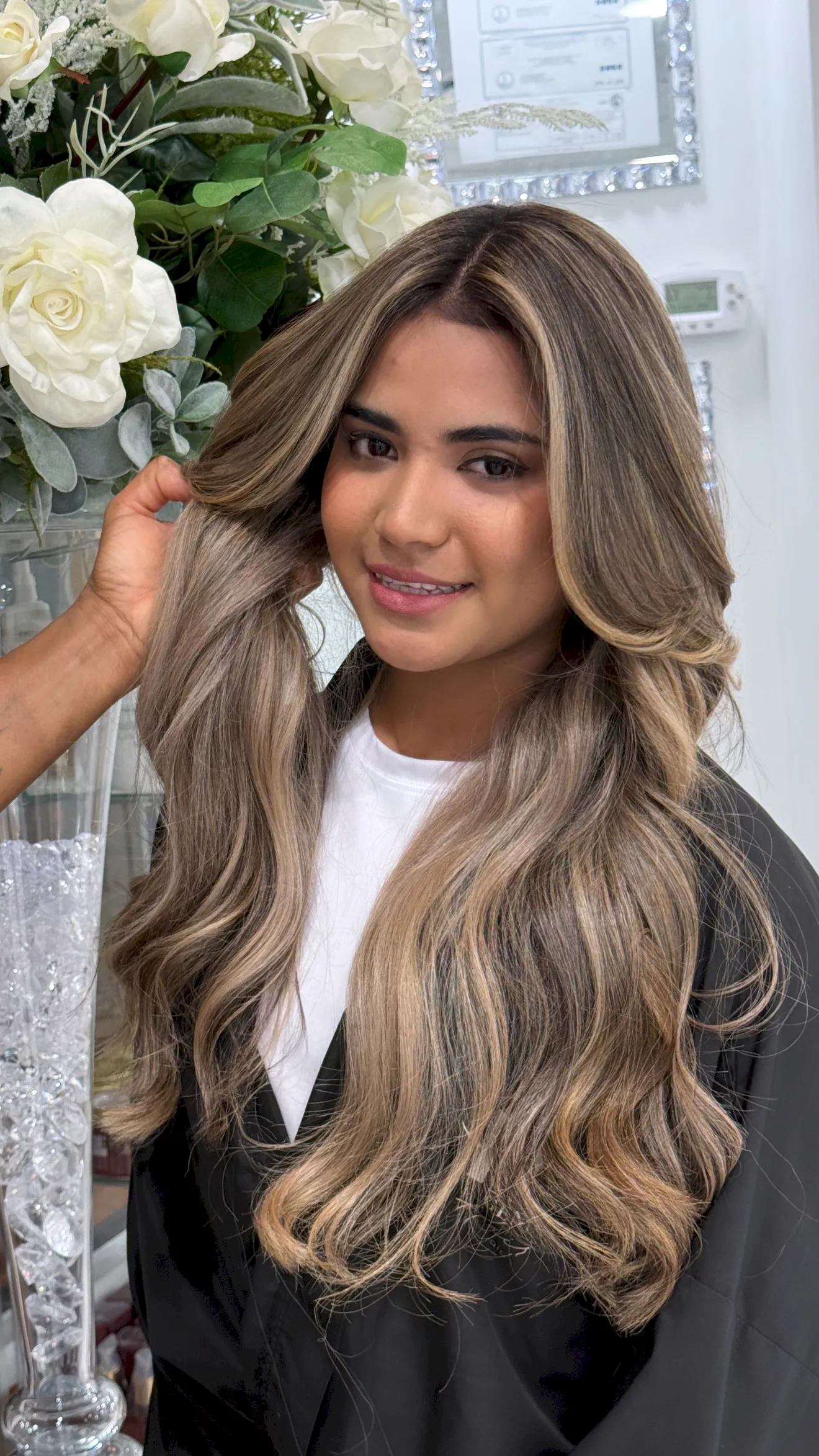
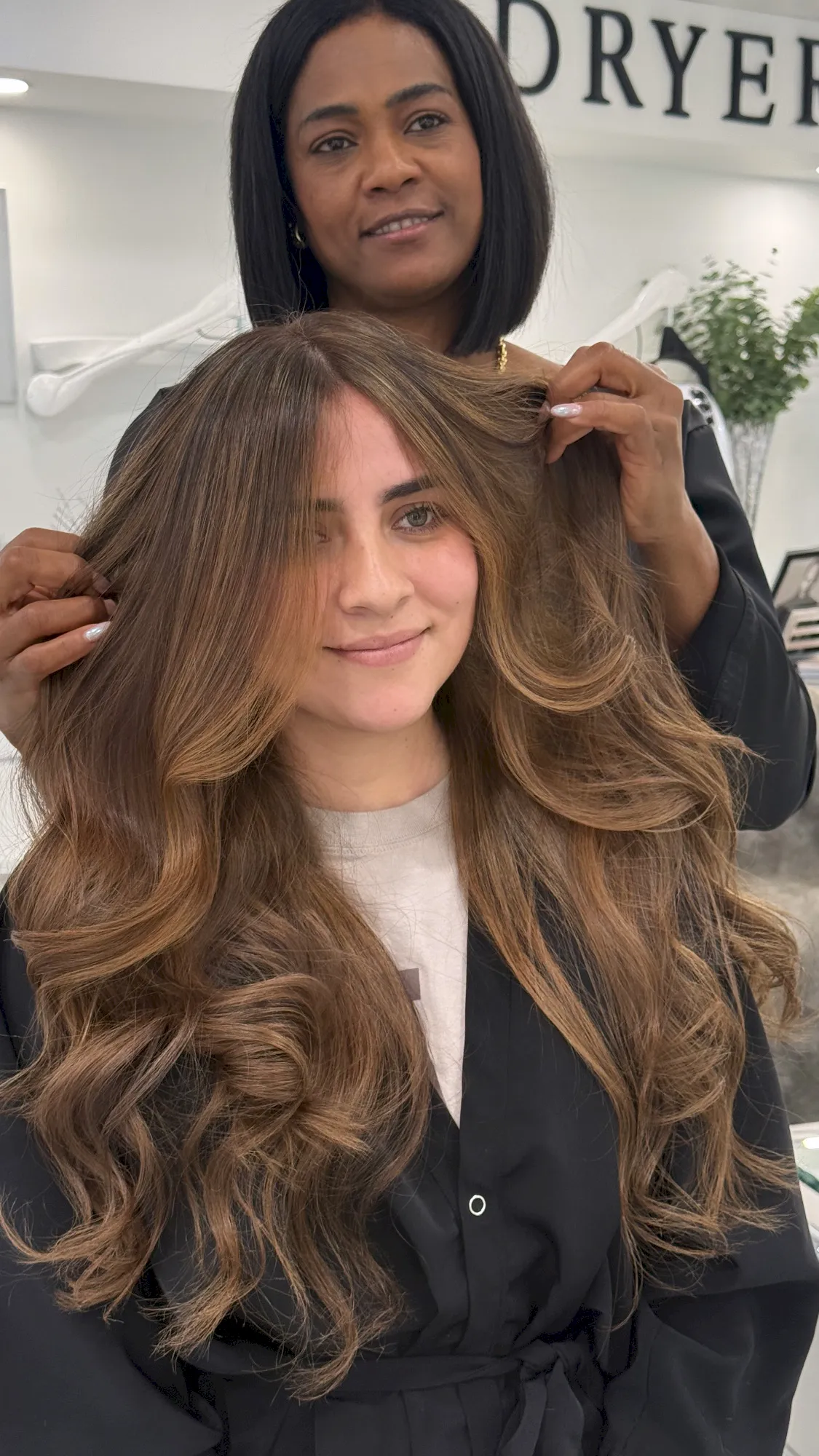
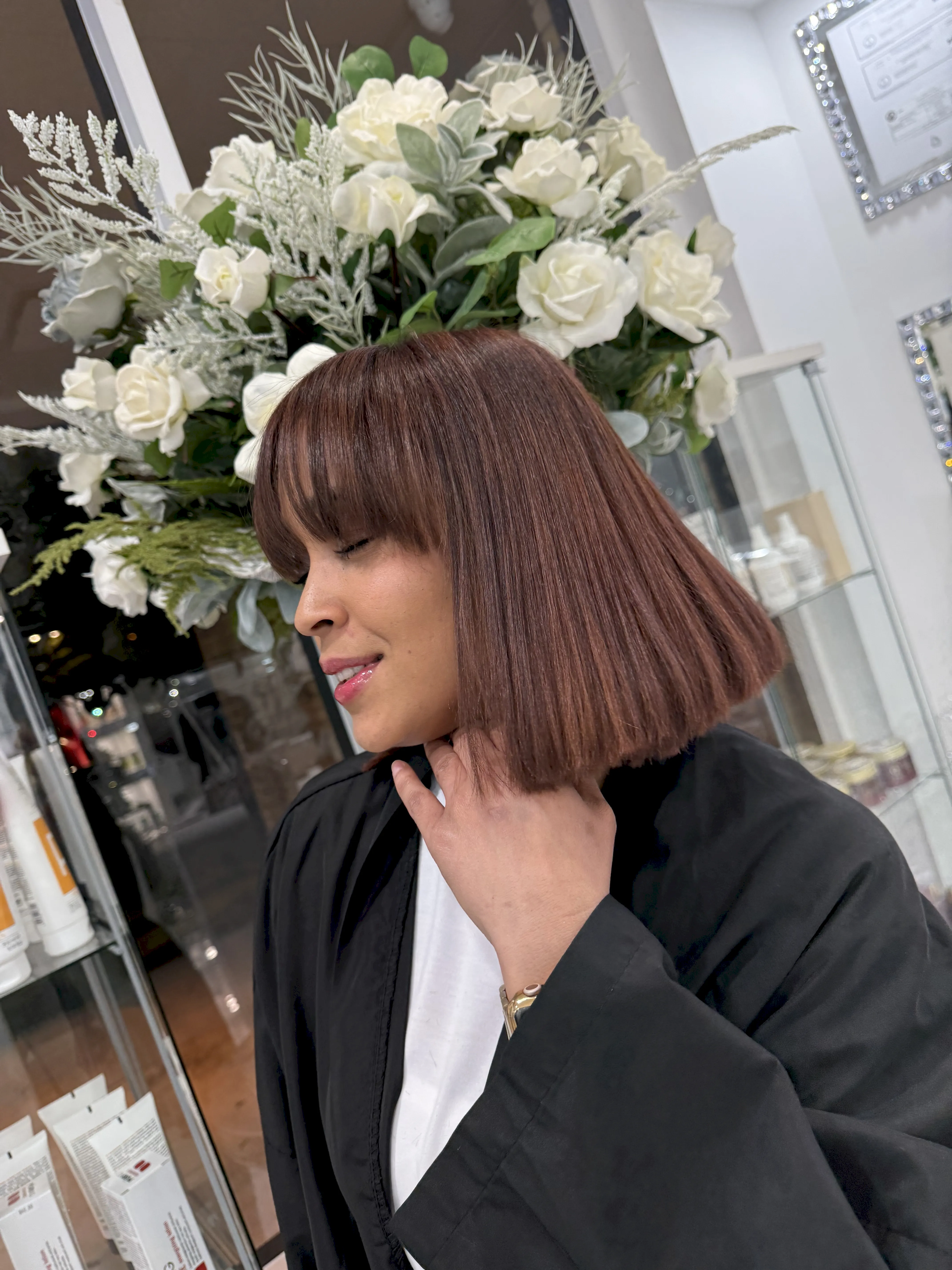
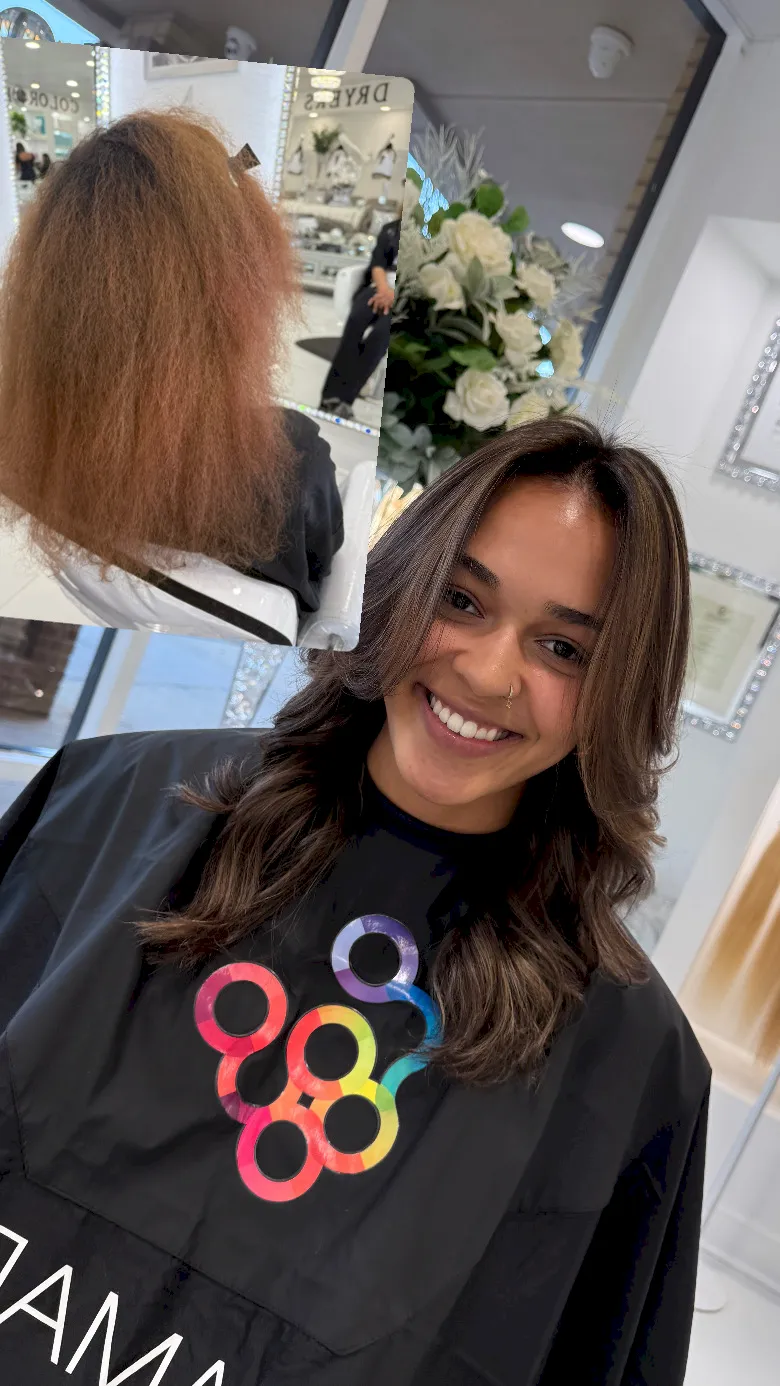
At Eugenia Hair Studio, gray blending is built from techniques on our color menu: highlights, balayage, and glossing and toning. Ask for it at your color consultation. It is free, includes a test strand 24 to 48 hours before your color, and ends with a plan (one visit or several), the upkeep and your quote. Prices are not published, because length, thickness, condition, your starting point and your goal all change the job. See our balayage and hair color services in Virginia Beach, and browse color work in the gallery.
Book a color consultation in Virginia Beach
Eugenia Hair Studio is at 4001 Virginia Beach Blvd, Suite 114, Virginia Beach, VA 23452. We offer balayage, full highlights, all-over color, color correction, and glossing and toning, plus haircuts and styling. Color takes planning, so book it ahead online or by phone. Hours are Monday 10 to 4, Tuesday to Thursday 10 to 6, Friday and Saturday 9:30 to 6, and Sunday closed. Se habla español.
- Book online
- Call or text 757-478-9908
- Meet Eugenia Drescher and the team, see our work in the gallery, or get directions and contact details.
The most common questions
What is gray blending?
A coloring technique that works your grays into your color instead of covering them. Harper's Bazaar and Vogue describe highlights, lowlights or tonal glosses placed so the grays sit naturally and grow out without a harsh line.
Does gray blending work on dark hair?
Yes, with more planning. A stylist told Allure that any hair color can look good with gray mixed in, though the blend is more seamless on lighter hair. Harper's Bazaar notes it may take considerably longer on hair dyed brown or black.
Is gray blending the same as balayage?
No. Gray blending is the goal of softening grays into your color; balayage is a hand-painting technique that can be one way to get there. Vogue describes total blending as combining balayage with other techniques.
Can you do gray blending without bleach?
Sometimes. A blend built mainly from lowlights and demi-permanent color may need little or no lightener, based on Allure and Oprah Daily. Brightening dark hair toward silver usually needs some lightening, which Vogue says can mean several levels. A consultation and test strand decide.
How many appointments does gray blending take?
Often more than one. Harper's Bazaar says multiple sessions are often required, and Oprah Daily says breaking up single-process color can take more than one appointment. A colorist in Good Housekeeping puts a full transition to gray at six months to a year.
How long does gray blending last?
With no hard line at the root, a blend grows out softly. The studio's guidance is a color refresh every 6 to 10 weeks, often just a gloss, with a gloss or toner between visits to keep the tone bright.
Is gray blending high maintenance?
Usually less than full gray coverage, which needs root touch-ups sooner. Harper's Bazaar notes fewer salon visits and longer gaps between appointments, with a gloss or toner and a violet toning shampoo to fight brassiness.
How much does gray blending cost?
Prices are not published on the site. Every color service at the studio is quoted at a free color consultation after a test strand, because length, thickness, condition, starting point and goal all change the job.