How Much Do Hair Extensions Cost? Real Pricing Factors
The salon window caught the parking-lot glow, and the light turned everything flatter than it felt. On Virginia Beach Boulevard, traffic hissed past in long silver ribbons while a woman named Marisol sat with her fingers in the ends of her hair, measuring what was left, what had snapped, and what she wanted back. How much do hair extensions cost, she wondered, but the real answer was already waiting in the mirror: price lives in the method, the hair itself, the maintenance that follows, and the honesty of a stylist willing to say what natural hair can safely handle.
Act I: the mirror under sodium light
The question sounds simple because search bars reward simple questions. But in a salon chair, under warm bulbs and the faint smell of toner and heat protectant, the question grows teeth. A woman with fine hair asking for volume does not face the same cost as someone chasing 24-inch length, bright blonde blending, and full density after years of box dye.
That tension matters more than any flat menu number. Hair extensions are never one thing. They are hair quality, install labor, color matching, home care, removals, move-ups, and the condition of the hair underneath.
For many women in Virginia Beach and across the 757, that last part changes everything. A head of hair already stressed by bleach, uneven color, or breakage cannot carry the same plan as healthy, dense hair. That is why the safest extension decision often starts the same way a serious color correction does: with a consultation, a close look at the strands, and a realistic plan.
Act II: the number on the screen vs the number on the receipt
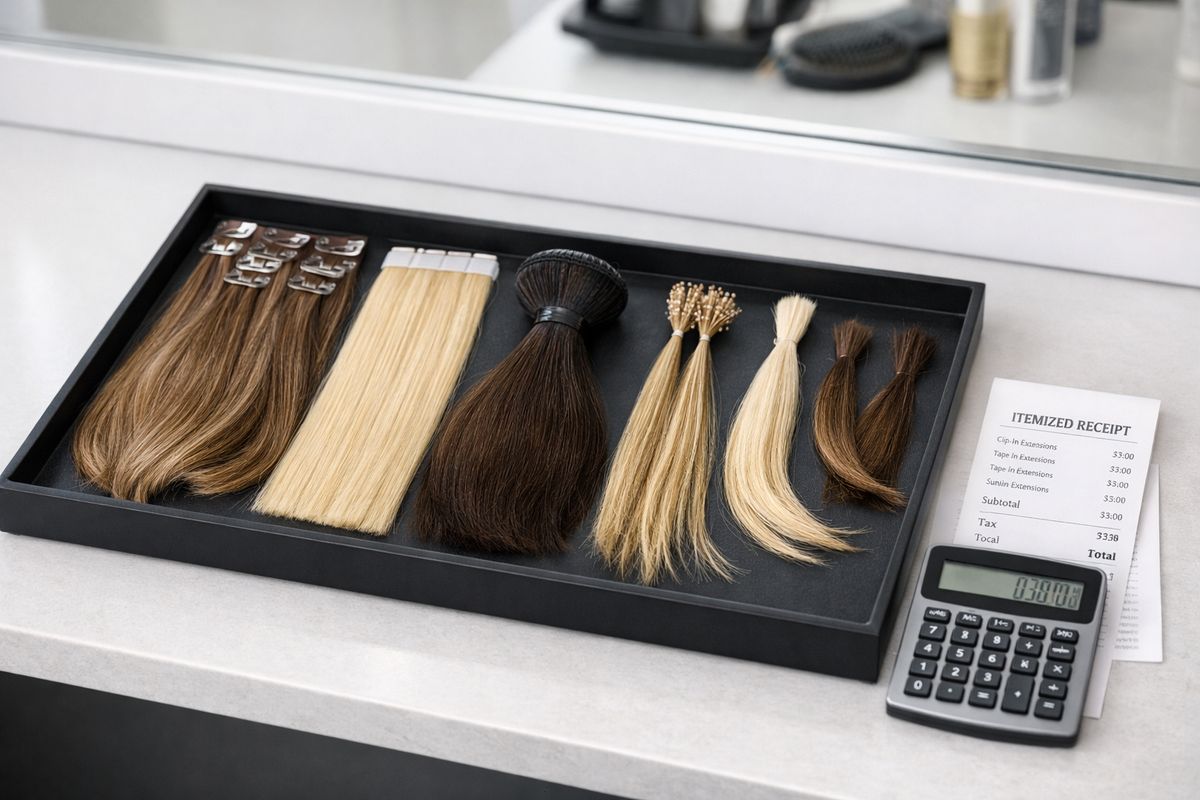
Hair extensions range from low-cost temporary pieces to luxury salon services that rival a vacation payment. Broadly, clip-ins and halos sit at the low end, tape-ins and some sew-ins occupy the middle, and premium keratin or custom hand-applied methods sit at the top. Nationally, professional installs often land between a few hundred dollars and several thousand, depending on method, hair quality, and salon tier.
That first number online is rarely the whole number. Many listed prices reflect only installation labor or only the hair. The receipt often tells a fuller story.
A fast pricing snapshot by extension type
Clip-ins usually cost the least because they are removable and often self-installed. Halos also stay on the lower end for the same reason: no adhesive, no bead, no bond, no long salon appointment.
Tape-ins sit in the middle because they combine purchased hair with salon labor and recurring maintenance. Sew-ins span a wide range because texture, braid base, bundles, and stylist expertise shift the total. Microlinks and I-tips often look moderate at first glance, then climb once strand count and maintenance are added. Keratin bonds and fusion extensions usually cost the most because each piece is applied strand by strand, and the appointment can stretch for hours.
Posted prices also vary by what is included. One salon may quote the install alone. Another may package hair, cut, and blend together. A third may list a starting price that assumes short length, minimal density, and no color work.
What most “starting at” prices leave out
The hidden charges are not actually hidden. They are simply tucked outside the headline number.
Consultations may be separate. A custom color match can cost more when the target shade falls between standard extension colors. Cutting and blending, which is the shaping that makes extensions merge into natural hair instead of hanging like a curtain, is often billed as its own service. Removal is frequently separate. So are maintenance visits, retaping, tightening, and replacement hair.
Then there is labor. Many stylists charge by time, and about $100 per hour is a common benchmark in industry summaries. Suddenly, a method that takes 30 minutes and a method that takes 4 hours no longer live in the same universe.
Act III: the methods and what they really cost
Each method tells a different story on the head. Some are occasional, some are daily wear, and some demand the kind of maintenance schedule that has to fit into real life.
Clip-ins and halo extensions: the lowest entry price
Clip-ins and halos are the easiest way into extensions because they do not require a salon install. They are removed at night, stored away, and brought back out for dinner, photos, weddings, and weekends when extra fullness changes the whole silhouette.
That lower price comes with limits. They do not behave like installed hair during daily wear. They can feel obvious on very fine hair, and they rarely deliver the same seamless finish as professionally fitted methods. Still, for occasional glam, they make sense. Market guides continue to place clip-ins among the cheapest categories, with basic clip-ins far below the cost of semi-permanent installs.
Tape-ins: mid-range pricing with salon maintenance
Tape-ins are often the first professional extension method many clients consider. They lie flatter against the head, feel lighter than bulkier methods, and create everyday fullness without the heaviness some people associate with extensions.
The catch is maintenance. Tape-ins need repositioning as the natural hair grows, and that schedule keeps coming. Industry pricing guides commonly place tape-in upkeep every 6-8 weeks, with recurring maintenance adding meaningful cost over time. For clients comparing methods side by side, blend and realism matter just as much as the first invoice, because tape-ins can look beautiful when density, color, and placement are handled well.
Sew-ins and weaves: price depends on hair, braid base, and density
Sew-ins cover a lot of territory. On one client, they are a practical volume service with a modest braid base and a manageable number of bundles. On another, they become a major transformation with long lengths, thick density, custom texture matching, and extensive blending.
That is why sew-in pricing swings so widely. The foundation matters. The amount of hair matters. The texture matters. For textured and curly clients especially, proper matching is not a small detail. It shapes how the install moves, how it blends at the perimeter, and how natural it appears once humidity enters the room.
Microlinks and I-tips: flexible, reusable, higher-labor services
Microlinks and I-tips appeal to clients who want movement and flexibility. Tiny sections are attached with beads, which means no tape panel and no glue-like bond at the base. The result can feel airy and natural, especially for clients who wear their hair down often and want more swing through the mids and ends.
But the labor adds up. These methods require careful placement, section by section, and the maintenance is precise. Repositioning, tightening, and replacing slipped pieces turn a moderate-looking quote into a longer ownership story. This is one reason many shoppers comparing fullness options end up studying what actually adds body instead of chasing the cheapest opening price.
Keratin bonds and fusion extensions: the luxury tier
Keratin bonds sit at the top because they demand patience, skill, and premium hair. Small strands are attached individually, producing a detailed result that blends beautifully around the face and through layered cuts. When done well, the finish looks expensive because it is expensive.
The appointment runs long. The removal is slow. The hair itself tends to be higher grade. Some 2026 pricing guides place luxury keratin installs well into the four figures, with keratin bonds as one of the highest-cost methods in the category.
Act IV: why one head of hair costs $300 and another costs $3,000
Two women can ask for “extensions” and leave with quotes that barely resemble each other. The difference is not random. It sits in the hair, the length, the color challenge, the time required, and the skill needed to protect natural hair.
Hair type: synthetic, human, remy, virgin, and raw
The quality ladder starts low and climbs fast. Synthetic hair is cheapest, but it lacks the lifespan, softness, and heat-styling flexibility most salon clients want. Human hair sounds premium, but that label alone means almost nothing. “Human hair” covers everything from heavily processed mixed-origin strands to high-grade cuticle-aligned hair.
Remy hair costs more because the cuticles run in the same direction, which reduces tangling and creates a smoother feel. Virgin and raw hair sit higher still because they have undergone less processing. Reports note that Remy carries a premium over standard human hair, and that premium shows up in softness, wear, and reusability.
Length, fullness, and number of rows or bundles
A subtle fullness service costs less than dramatic transformation hair. That sounds obvious, but many buyers still underestimate how quickly inches and density multiply cost.
Longer hair requires more material. Thicker results require more grams, more bundles, or more rows. Moving from a soft, shoulder-length blend to waist-level glamour changes everything, including install time, blend work, and the amount of hair needed to keep the result from looking thin at the ends.
Color work and custom blending
This is where many local extension quotes rise. Hair that needs to match brassy blondes, soft balayage, dimensional brunettes, or curls with several tones rarely comes straight out of a package looking finished.
Toner is the product used to refine warmth or shift the tone after lightening, and it matters just as much on extension hair when the goal is a believable match. Porosity, which describes how readily hair absorbs and holds moisture or color, also affects how extension hair and natural hair take color differently. Clients dealing with orange bands, box-dye stains, or uneven blonde often need a more detailed blend. That work adds labor and product cost, but it also prevents the flat, obvious look that gives extensions away.
Installation time and stylist expertise
Some installs take under an hour. Others consume half a day. The receipt reflects that difference.
Advanced training carries a cost too. Certification classes, ongoing technique education, and experience with multiple hair types all shape pricing. That higher fee is not decoration. It often protects the natural hair by improving sectioning, tension, placement, and removal technique. For clients whose hair is already fragile, waiting instead can be the more honest recommendation than forcing an install too early.
Salon location, experience level, and service model
A budget salon, a private studio, and a luxury service model do not price the same way. The difference is not just branding. It includes timing, privacy, consultation depth, one-on-one attention, product selection, and often the level of customization.
In Hampton Roads, clients also weigh convenience and service experience. A calm appointment, bilingual support, and a stylist willing to map color and extension planning together can change the value equation. At Eugenia’s Hair Studio, that kind of high-touch consultation matters because extensions never live alone. They sit inside a larger story about color, condition, and what hair can handle next.
Act v: the first appointment is not the full story
The first appointment is only the opening chapter. The smarter question is what extensions cost over 3 months, 6 months, and a full year.
Maintenance appointments and move-ups
Every method comes back to the chair on its own schedule. Tape-ins need retaping and repositioning. Microlinks need tightening and bead maintenance. Sew-ins require reinstall appointments. Even methods advertised as long-wear still need check-ins to keep attachment points secure and blending polished.
Those visits often run $50-$300+ depending on method and salon. In high-end settings, maintenance rates can climb even higher, especially when the appointment includes detailed repositioning or extension-specific styling.
Removal, reapplication, and replacement hair
Removal is usually not free. That surprises buyers who focus only on install day.
Some extension hair can be reused, especially when quality is high and home care is consistent. Some cannot, or should not. Tape tabs wear down. Bonds break apart during removal. Lower-grade hair loses softness and tangles faster. Many clients eventually pay for fresh hair, not because they did anything wrong, but because the material itself has reached the end of its useful life.
Yearly cost: budgeting for 3, 6, and 12 months
A lower first appointment does not always equal lower yearly cost. Tape-ins may start below premium methods, then accumulate through regular move-ups and replacement tabs. Microlinks may save on replacement hair for a time, then demand steady labor. Keratin bonds often start high, but some clients prefer the wear pattern and the tailored finish enough to justify the expense.
This is the only framework that matters: total ownership cost. Day-one price is the headline. The year is the truth.
Act VI: what works for real life in the 757
Extension advice that ignores climate and routine is not useful. Hair does not live in a catalog. It lives in weather, sweat, sea air, and rushed weekday mornings.
Humidity, salt air, and summer frizz
In coastal air, hair swells. Texture lifts. Blends that looked sleek in an air-conditioned salon can shift once moisture gets into the cuticle. Salt air and wind also rough up the surface, especially on longer lengths that brush shoulders, car seats, and tote straps all day.
That affects method choice. Adhesive methods need careful home care in heavy humidity. Long loose hair tangles faster after beach days. Curled styles fall sooner. In a place like Virginia Beach, the most polished plan is the one built for weather instead of fantasy.
Gym, beach days, military schedules, and daily routine
Lifestyle decides more than inspiration photos do. A client who works out daily, washes often, and throws hair into a high ponytail every morning needs a different method than someone styling twice a week. Someone balancing rotating shifts or deployment-related travel often values a method with predictable upkeep and fewer surprises between visits.
Low-maintenance preferences matter too. A style that looks beautiful but demands constant detangling, precise drying at the roots, or frequent salon returns is the wrong fit for a packed schedule. The right extension plan always respects the calendar.
Textured and curly hair considerations
Textured and curly extension work asks more of both the hair and the stylist. Curl pattern has to match. Density has to make sense from root to ends. Shrinkage, which is the way curls appear shorter as they coil, changes visual length and blending strategy.
That is why true texture matching often costs more. The service is not just installation. It is curation, shaping, and blending so the result belongs to the natural hair instead of sitting on top of it.
Act VII: the cheapest option is not always the lowest cost
Cheap extensions can become expensive in a hurry. What looked like savings on day one often turns into another appointment, another purchase, and another round of correction.
Common pricing traps buyers miss
The first trap is the vague quote. “Hair included” means very little without grade, length, and density listed clearly. The second trap is low install pricing that leaves out removal, maintenance, or blending.
The third trap lives online. A bundle can look glossy in photos and behave badly within a week, shedding, matting, and tangling at the nape. Salon markup also explains some price shock. Reports show retail markups can be substantial, but those prices often reflect sourcing, curation, and the salon standing behind the hair instead of handing over a mystery package.
Damage, redo appointments, and the cost of starting over
Bad sectioning places too much weight on too little natural hair. Poor bead placement causes slipping or tension. Weak color matching makes attachment points stand out and forces extra toning or replacement. An install rushed onto overprocessed hair often fails twice, once in the mirror and once in the health of the strands underneath.
That matters even more for clients already recovering from box dye, heavy blonding, or uneven work from another salon. Extensions do not erase compromised hair. They can expose every weakness in it.
Act VIII: matching the method to the goal
The smartest purchase starts with the outcome, not the trend. Different goals justify different investments.
Best for occasional glam: events, photos, and weekends
Clip-ins and halos make the most sense for women who want temporary length or fullness without the rhythm of salon maintenance. They come out at night, they cost less upfront, and they suit weddings, birthday dinners, and photo sessions especially well. Industry data even notes that brides spend about $300 on extensions on average, which captures this event-driven category perfectly.
Best for everyday volume and length
Tape-ins, some sew-ins, and select microlink services tend to win this category because they create a polished daily result without pushing immediately into the most expensive tier. Comfort matters here. So does how the hair behaves at the gym, in wind, and during rushed mornings.
Best for high-end, long-wear transformation
Keratin bonds and advanced custom installs fit clients seeking a highly tailored finish, especially around the face and through layered cuts. These methods suit major image shifts and clients who value fine-detail blending over short-term savings. The cost is higher because the labor and hair quality are higher.
Best for damaged, overprocessed, or color-corrective hair journeys
When natural hair is fragile, the safest plan often unfolds in stages. A stylist may prioritize repairing the visual color story first, toning brassiness, softening uneven bands, or planning a balayage transition, then revisit extensions once the hair is better prepared to carry them.
That answer disappoints clients who want instant change. It is still the right answer. For compromised hair, honesty is worth more than speed. A consultation at Eugenia’s Hair Studio can sort through those priorities and build a realistic plan. Schedule a consultation.
Act IX: the questions smart buyers ask before booking
Good extension shopping sounds less like “How much?” and more like “What exactly is being purchased?”
What exactly is included in the quote?
The quote should state whether it includes the hair, installation, cutting, blending, color matching, maintenance timing, removal, and home-care guidance. If those pieces are missing, the quote is incomplete.
What hair grade and brand is being used?
A buyer should know whether the hair is synthetic, standard human, Remy, virgin, or raw. Reuse expectations should also be discussed clearly. “Human hair” alone is not enough information to justify a premium price.
How will the plan protect natural hair?
A serious stylist should discuss tension, density matching, scalp comfort, and realistic limits. That is especially true for blondes with breakage, clients dealing with chemical damage, and anyone seeking a major color correction alongside extensions.
Act x: a scene-by-scene budget guide
Buyers do not shop by method alone. They shop by budget, then compare what that budget actually buys.
Under $300
At this level, expectations should stay in the temporary category. Clip-ins, halos, synthetic options, and some entry-level human hair pieces live here. Salon involvement is limited, and the result is usually best for occasional wear rather than seamless daily use.
$300 To $1,000
This is the broad value zone for many shoppers. Better-quality temporary hair, some tape-in services, selected sew-ins, and certain microlink installs begin here, though pricing varies sharply based on hair quality and how much hair is needed. A consultation is the best way to get an accurate quote because this is the range where small changes in length, density, and color blending start moving the number quickly.
$1,000 To $3,000+
This tier covers premium hair, longer lengths, denser installs, keratin bonds, advanced blending, and luxury service models. It serves clients seeking major transformation, daily wear, and a more customized finish. The benefit is not status. It is detail, longevity, and a plan shaped around the actual hair on the head.
Act XI: the last look in the glass
By the time Marisol looked back into the mirror, the room had changed. The hum from the boulevard still moved beyond the glass, but softer now, and the light no longer felt harsh. The price was no longer a mystery number floating on a screen. It had become something solid: hair, labor, maintenance, honesty, and the condition of the strands beneath it.
That is the real cost of extensions. For women weighing color correction, balayage, or a fuller transformation, the smartest next step is simple: talk with Eugenia about it, under better light than a parking lot window.
The most common questions
How much do hair extensions cost on average?
What is the most expensive type of hair extension?
Do salons charge separately for the hair and the installation?
Are clip-in extensions cheaper than salon extensions?
Getting the style you dream of is more than just adding length. Many people looking for natural looking hair extensions find the key is in a detailed, strand-by-strand application. This way, the extensions blend seamlessly with your hair.
Experience the art of hair styling with the Dominican blowout, a non-chemical service that enhances your natural beauty. At the Escape Blowdry Bar and Salon, located in Virginia Beach, clients can enjoy a unique approach to polished hair without the use of harsh relaxers. Since opening in 2017, this salon has become a staple for those in Hampton Roads seeking quality hair services.
Humidity can be a real challenge for those living in coastal areas. A stylist who recently moved from Denver to Virginia Beach has shared how the local weather can make managing hair difficult. This is especially true for those with curly or frizzy hair, who often find their locks becoming unmanageable.





.svg)


